
UK Hotel Investment: Do Branded or Independent Hotels Offer Better Yields?
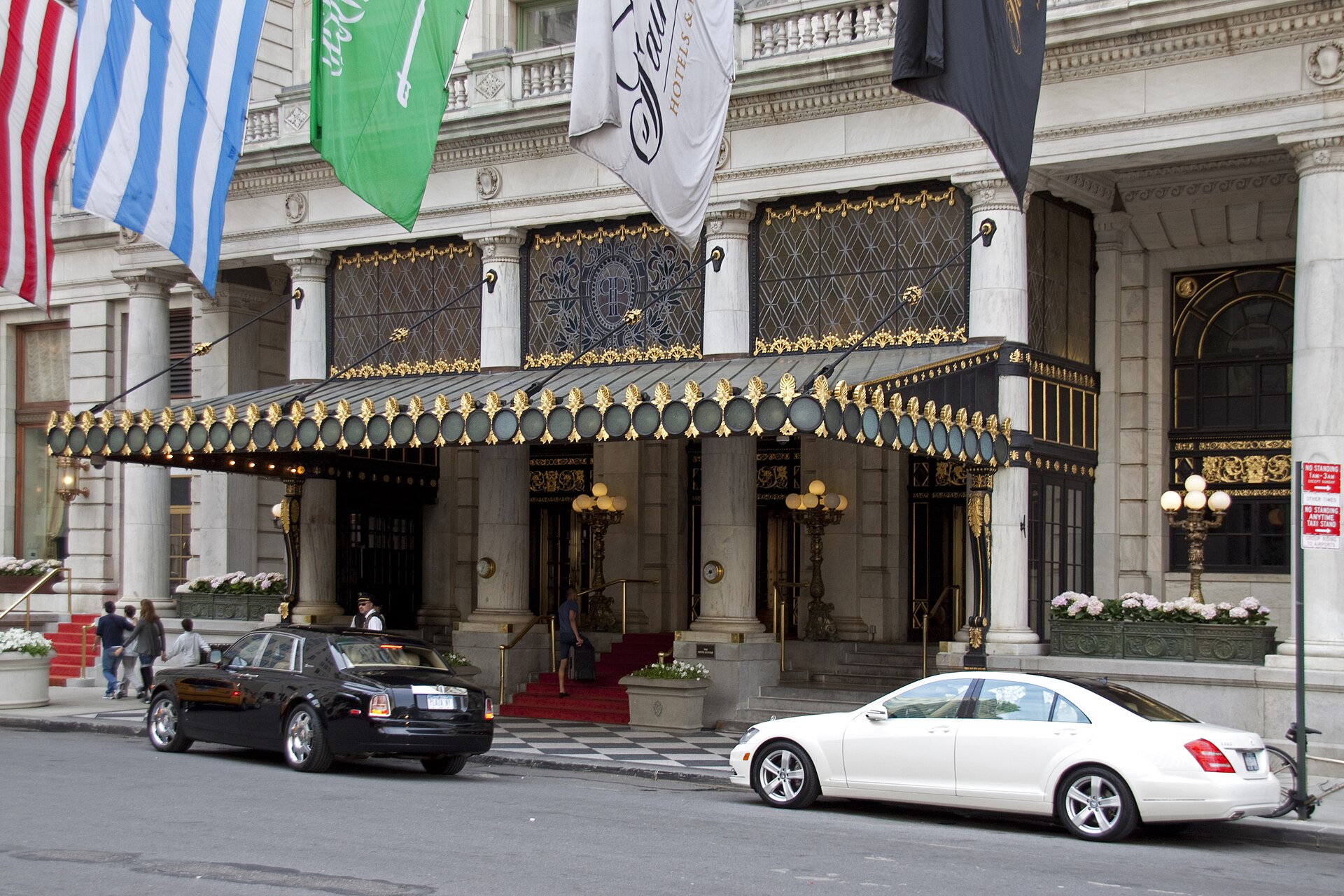
Independent UK hotels can offer higher initial yields than comparable branded hotels, but the premium usually compensates investors for greater operating, financing and exit risk. Branded hotels often trade at sharper yields because their distribution, reservation systems and lender familiarity can support more resilient cash flow; the better investment depends on the brand agreement, operator, location, capital expenditure and basis of valuation.
TL;DR
- Independent hotels commonly need to offer a higher prospective return because investors assume more operating and liquidity risk.
- A recognised brand can improve distribution, lender acceptance and exit liquidity, but franchise, management and property-improvement costs reduce owner returns.
- Hotel yield comparisons are unreliable unless they use the same metric: property yield, EBITDA yield, leveraged equity return or internal rate of return.
- London, Manchester, Birmingham, Leeds, Liverpool and Edinburgh have different demand profiles, so branding should be assessed market by market.
- The most important underwriting variables are sustainable EBITDA, operator structure, brand obligations, capital expenditure and acquisition price.
Branded vs independent hotel yields at a glance

There is no universal yield gap between branded and independent UK hotels. Hotels are operational real estate: income depends on occupancy, average daily rate, revenue per available room, staffing, utilities, distribution costs and active management rather than rent alone.
The table below is therefore directional, not a valuation benchmark. A prime independent boutique hotel may price more keenly than a weak branded asset, while a long lease to a strong covenant can trade more like conventional income-producing property than an operating hotel.
| Investment factor | Branded hotel | Independent hotel | Likely yield implication | |—|—|—|—| | Initial acquisition pricing | Often keener for established brands and proven locations | Often discounted where operations are less proven | Independents may show a higher initial yield | | Distribution | Brand website, loyalty platform and global reservation system | Direct booking, online travel agencies and local marketing | Brand may reduce demand volatility | | Fees | Franchise, marketing, reservation or management charges | No brand fee, but owner funds all commercial capabilities | Headline revenue advantage may not equal higher profit | | Financing | Often easier for lenders to understand | More dependent on operator track record and asset quality | Better financeability can sharpen branded pricing | | Capital expenditure | Brand standards and property-improvement plans can be prescriptive | Greater flexibility, subject to guest expectations | Brand obligations may reduce cash yield | | Operational control | Constrained by franchise or management agreement | High owner control | Independent owners can adapt faster | | Exit market | Potentially broader institutional buyer pool | May rely on specialist or entrepreneurial buyers | Greater liquidity can lower required yield | | Upside | Brand strength, loyalty demand and revenue management | Repositioning, local identity and removal of fees | Asset-specific rather than structural |
Required unlevered returns for full-service and limited-service UK hotels vary materially by asset and investor. Distressed, secondary, leasehold or operationally complex assets may be underwritten at higher required returns than stronger assets in established locations, but tenure, geography, condition and income structure can all move pricing substantially.
What “hotel yield” actually means

A quoted hotel yield can describe several different calculations. Before comparing branded and independent opportunities, investors should identify the numerator, denominator and treatment of fees, replacement reserves and purchaser’s costs.
Common return measures
- Property yield: Rent divided by acquisition price, typically used for leased hotels. Its usefulness depends heavily on tenant covenant and rent cover.
- EBITDA yield: Sustainable earnings before interest, tax, depreciation and amortisation divided by total acquisition cost. Adjusted EBITDA definitions must be normalised carefully.
- Net operating yield: Cash flow after operating expenses, but definitions vary over management fees, franchise charges and furniture, fixtures and equipment reserves.
- Cash-on-cash return: Annual pre-tax cash flow divided by invested equity after debt costs.
- Internal rate of return: A multi-year equity return incorporating acquisition, operating cash flows, capital expenditure, refinancing and sale.
Illustrative comparison
Assume two hotels each cost £20 million including acquisition expenditure.
| Illustrative item | Branded hotel | Independent hotel | |—|—:|—:| | Normalised annual EBITDA before brand-related charges | £1.6m | £1.5m | | Brand, marketing and system charges | £0.2m | £0.0m | | Independent commercial infrastructure | £0.0m | £0.15m | | Adjusted cash earnings before finance and reserve | £1.4m | £1.35m | | Illustrative unlevered yield | 7.0% | 6.75% |
This example is not a market forecast. It shows why brand fees cannot be considered in isolation: an independent hotel still needs revenue management, digital marketing, booking technology and sales capability. Investors should compare the full cost of customer acquisition and operation.
RICS valuation standards provide the relevant professional framework, while specialist evidence from Savills, Knight Frank, JLL, CBRE and Colliers can help establish transactional context. Published asking yields are not a substitute for verified deal evidence and normalised accounts.
Why branded hotels often trade at sharper yields

A branded hotel can command a lower yield—meaning a higher price relative to income—where the brand reduces perceived volatility and broadens the future buyer pool.
Distribution and demand generation
Major brands provide central reservation systems, loyalty programmes, corporate account relationships and revenue-management tools. These capabilities can support occupancy and room rates, particularly in internationally connected markets such as London, Manchester and Edinburgh.
GCC investors and family offices may also value recognised brands because they make an unfamiliar operating market easier to assess. Brand recognition is not a guarantee of profitability, however; local positioning and execution remain decisive.
Financeability
Lenders typically assess location, historic trading, debt-service coverage, loan-to-value, operator experience and capital expenditure. A recognised franchise can make the business plan more legible, although it will not repair poor economics or an overleveraged capital structure.
The Bank of England base rate affects debt pricing, refinancing risk and equity returns across both models. Because hotel income is variable, interest cover should be stressed against lower occupancy, weaker room rates and higher payroll costs rather than relying only on a static capitalisation yield.
Exit liquidity
Institutional capital frequently favours assets with standardised reporting, professional management and recognisable operating structures. Build-to-Rent and PBSA investors are familiar with operational property, but hotels carry daily pricing, labour and food-and-beverage exposure. A credible brand can reduce—not eliminate—that operational complexity for a future buyer.
Where independent hotels can outperform

Independent hotels can generate superior returns where identity, local knowledge and management flexibility translate into stronger margins or faster repositioning.
Pricing power through differentiation
A well-designed boutique hotel in London, Bath, York, Edinburgh or the Cotswolds may attract guests because it is not standardised. In such cases, local identity can support room-rate premiums and direct bookings. The same principle can apply to lifestyle hotels in Manchester, Liverpool, Leeds and Birmingham where food, beverage and events reinforce the accommodation offer.
Lower contractual friction
Independent owners avoid franchise fees and may alter room concepts, food-and-beverage space, staffing or distribution quickly. They are also less exposed to brand-mandated property-improvement plans at renewal or transfer.
This flexibility is valuable only if ownership has the operating capability to use it. Savings from removing a brand can be absorbed by online travel agency commissions, marketing expenditure, technology and weaker corporate demand.
Repositioning upside
An under-managed independent asset may offer several value-creation routes:
- professional revenue management;
- refurbishment and room reconfiguration;
- conversion of underused food-and-beverage areas;
- stronger meetings, events or extended-stay demand;
- a later franchise affiliation or soft-brand conversion; and
- operational procurement and energy-efficiency improvements.
A soft brand can provide access to a global distribution system while preserving more local identity. Investors should still model fees, brand standards and termination rights as rigorously as for a conventional franchise.
The operating structure can matter more than the flag

“Branded” and “independent” are not complete investment categories. The same hotel brand can sit within a lease, management agreement, franchise or owner-operated model, each creating a different risk and return profile.
> Branded vs independent comparison box > > – Lease vs operational exposure: A leased branded hotel may deliver contractual rent; an owner-operated independent hotel exposes the investor directly to trading performance. > – Franchise vs management agreement: A franchise leaves more operational responsibility with the owner; a management agreement delegates operations but can reduce owner control. > – Hard brand vs soft brand: A hard brand generally imposes greater standardisation; a soft brand may preserve individuality while supplying distribution. > – Freehold vs leasehold: Freehold ownership usually offers stronger control and residual value; leasehold value depends on term, rent and restrictions. > – Fixed rent vs turnover rent: Fixed rent improves visibility but depends on covenant and coverage; turnover rent aligns income with performance but increases volatility.
A strong independent operator with transparent accounts may be more investable than an undercapitalised franchisee. Conversely, a reputable brand cannot compensate for a short lease, unsustainable rent, poor access or a heavy refurbishment requirement.
How to underwrite a UK hotel acquisition
A disciplined review should separate property value, operating-business value and financing effects.
Investor due-diligence checklist
- Define the return metric. Reconcile room revenue to departmental profit, gross operating profit, EBITDA and free cash flow.
- Normalise trading. Review at least three years of monthly occupancy, average daily rate, revenue per available room and payroll data where available.
- Test local demand. Separate corporate, leisure, group, event, airport, university and seasonal demand.
- Benchmark competitors. Compare room count, quality, rate positioning, planned supply and refurbishment cycles.
- Review the brand contract. Examine term, transfer rights, performance tests, area protection, termination rights and liquidated damages.
- Cost the property-improvement plan. Include rooms, public areas, mechanical systems, fire compliance, accessibility and technology.
- Verify tenure and planning. Review title, lease terms, use, licences and restrictions through the relevant legal and local-authority process.
- Stress-test finance. Model higher interest costs, refinancing at lower leverage and covenant pressure.
- Reserve for replacement expenditure. Hotels require continuing investment in furniture, fixtures, equipment and building systems.
- Model the exit. Apply a conservative stabilised profit and exit yield, net of selling costs and any brand-transfer expenditure.
HM Land Registry can confirm title information and completed property transactions where recorded, while gov.uk provides the statutory framework for taxation and planning. ONS data can help assess tourism, labour and regional economic conditions. FCA regulation may be relevant to financing, fund structures or promoted investments, but hotel property itself should not be assumed to carry regulatory protection.
Location, demand and taxation shape the yield

The appropriate yield depends on whether demand is deep, diverse and resilient. London benefits from international tourism and corporate demand but carries high entry costs. Manchester combines business, events, aviation, leisure and football demand. Birmingham and Leeds have substantial corporate and conference markets, while Liverpool has a pronounced leisure and events profile.
Sheffield and Nottingham may offer lower entry prices, but asset selection is critical because demand can be more localised. University demand supports local economies, although a hotel is not interchangeable with PBSA. Likewise, hotel rooms should not be underwritten like HMOs or conventional residential property: nightly income can reprice quickly, but operating costs and volatility are much higher.
Statistics and policy points to track
- 2024 — Tourism data: ONS publishes UK travel and tourism releases, including international visitor trends relevant to hotel demand.
- 2024 — Transaction evidence: HM Land Registry records completed property transactions, although hotel business sales and portfolio structures may limit direct comparability.
- 2026 — Interest rates: The prevailing Bank of England base rate should be checked at underwriting and completion because it affects debt pricing and purchaser returns.
- 2026 — Tax: Current SDLT rates and surcharges should be verified on gov.uk; hotel acquisitions should not automatically be modelled using residential SDLT assumptions.
A company acquiring a hotel may use a Ltd company or a special-purpose vehicle, but the optimal structure depends on corporation tax, VAT, capital allowances, financing, ownership jurisdiction and exit plans. GCC investors should also examine UK tax, treaty, withholding, sanctions, source-of-funds and succession issues with regulated advisers. The residential SDLT surcharge is not a blanket proxy for hotel transaction tax.
McGardens’ view
The branded-versus-independent question is most useful as a framework for pricing risk, not as a rule for selecting assets. A branded hotel deserves a sharper yield only when the distribution advantage remains visible after fees, required capital expenditure and contractual constraints. An independent hotel deserves its projected premium only when ownership can evidence the operational capability needed to capture it.
For family offices, the central question is governance. Direct hotel ownership can suit patient capital with access to specialist asset management and the ability to fund refurbishment through the cycle. Passive investors should be cautious about strategies that depend on aggressive room-rate growth, low replacement reserves or a single operator.
For institutional capital, scale and repeatability matter. Portfolios, platforms and management agreements can support consistent reporting, procurement and financing. A single independent hotel may still be institutional quality, but its key-person and exit risks must be addressed explicitly.
GCC investors may find recognised international brands attractive for familiarity and potential synergies with travel patterns. Yet paying a premium solely for the flag can compress returns. The preferred route is often a strong real-estate basis with multiple viable operating options: continue the brand, renegotiate, convert to a soft brand or operate independently where economics support it.
Key takeaways
- Higher independent-hotel yields usually represent compensation for operational, financing or liquidity risk.
- Brand value should be measured after all fees and mandatory capital expenditure.
- The operating agreement, sustainable EBITDA and acquisition basis matter more than brand recognition alone.
- Conservative leverage and a funded replacement reserve are essential for through-cycle ownership.
- Optionality at exit is often the clearest source of downside protection.
FAQ
Are independent UK hotels higher yielding than branded hotels?
Independent UK hotels often offer higher initial yields, but there is no fixed market premium. The apparent uplift may compensate for weaker distribution, greater earnings volatility, limited lender appetite, deferred capital expenditure or a narrower exit market. Investors should compare sustainable post-fee cash flow and risk-adjusted internal rates of return, not only the seller’s quoted yield.
What is a good yield for a UK hotel investment?
A good UK hotel yield is one that adequately compensates for location, tenure, operating exposure, capital expenditure and financing risk. Required unlevered returns vary by asset, strategy and investor, and complex or secondary assets may require a higher return than stronger assets in established locations. A leased hotel and an owner-operated hotel should not be benchmarked on the same basis.
Does a hotel brand make bank financing easier?
A recognised hotel brand can make financing easier by giving lenders clearer operating benchmarks, established distribution and a familiar contractual structure. It does not guarantee credit approval. Banks also test historic earnings, debt-service coverage, borrower experience, leverage, property condition, brand-agreement terms and downside performance under higher interest rates or weaker occupancy.
Which UK cities are strongest for hotel investment?
London, Manchester, Edinburgh, Birmingham, Leeds and Liverpool are among the principal markets considered by hotel investors, but no city is uniformly strongest. Returns depend on micro-location, demand generators, competing supply and entry price. Sheffield and Nottingham may provide lower-cost opportunities, although investors should test the depth and seasonality of local demand carefully.
What costs can reduce a branded hotel’s return?
Franchise fees, central marketing charges, reservation fees, loyalty-programme costs, management fees and property-improvement obligations can reduce a branded hotel’s return. Investors should also budget for furniture, fixtures and equipment replacement, payroll, utilities, insurance, business rates and financing. Every charge should be reflected in cash flow before comparing the asset with an independent hotel.
Is a franchise or hotel management agreement better for investors?
A franchise is generally better for owners seeking greater operational control, while a hotel management agreement may suit investors wanting an experienced operator to run the property. Neither is inherently superior. The decision depends on fees, performance tests, termination rights, operator capability, owner approvals, budget control and whether the investor has an internal hotel asset-management function.