
Nottingham PBSA: What Do Supply, Demand and Returns Look Like?
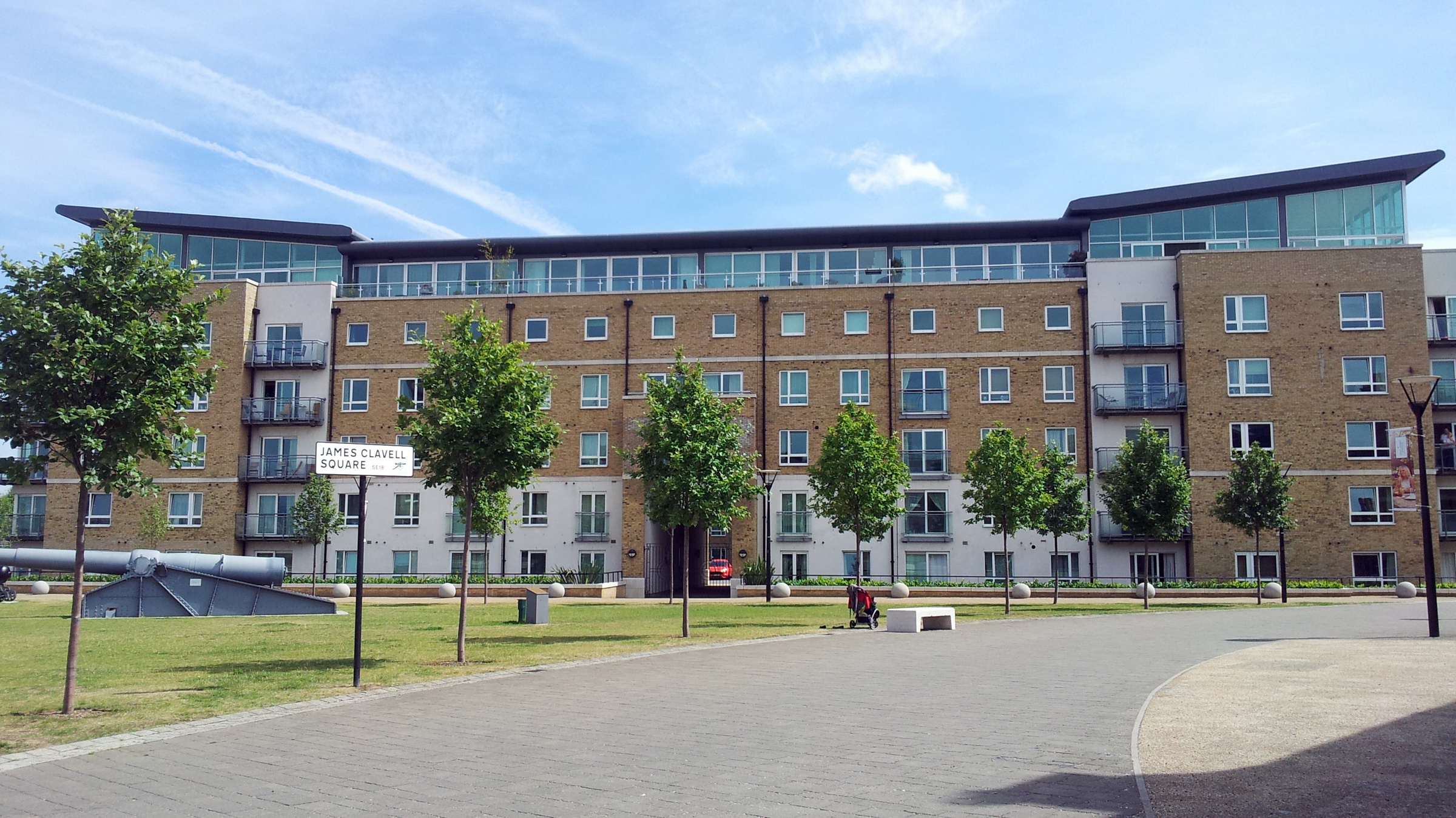
Nottingham PBSA has a credible investment case because the city serves two major universities, attracts domestic and international students, and has limited capacity to deliver suitable accommodation in the strongest locations. Returns can be resilient, but investors should underwrite each scheme on its micro-location, university exposure, room type, operating costs and future supply rather than relying on citywide demand alone.
TL;DR
- Nottingham’s demand base is anchored by the University of Nottingham and Nottingham Trent University.
- Purpose-built student accommodation, or PBSA, competes with university halls, HMOs and conventional private rentals.
- City-centre demand differs materially from demand around University Park, Beeston, Lenton and Clifton.
- Headline rental yield is not the same as net operating income after utilities, management, maintenance and lifecycle costs.
- Overseas investors must also account for financing, UK tax, the SDLT surcharge and remote management.
Why Nottingham attracts PBSA capital

Nottingham is one of the UK’s established regional student markets. Its investment proposition rests primarily on two large institutions with different campus footprints and student profiles: the University of Nottingham and Nottingham Trent University.
The University of Nottingham has major teaching activity around University Park and Jubilee Campus, with additional facilities elsewhere. Nottingham Trent University has a substantial city-campus presence and activity at Clifton and Brackenhurst. This creates several demand zones rather than one uniform student market.
Nottingham also offers the characteristics sought by many PBSA investors:
- A large and recurring student population
- Two principal demand anchors rather than one university
- A compact city centre with public-transport connectivity
- Established student neighbourhoods such as Lenton and Beeston
- A graduate economy supported by Nottingham’s wider employment base
- Entry pricing that can be lower than in London and some southern university cities
These features do not eliminate risk. Recruitment can shift between institutions and courses, while student affordability places a practical ceiling on rents. Demand therefore needs to be analysed by university, campus, price point and room type.
McGardens Estate (MCG) is a UK real estate investment and management firm advising family offices, GCC and overseas private capital and institutional investors, and managing UK rental portfolios for overseas landlords.
Nottingham PBSA supply: what investors should measure
PBSA supply includes university-owned halls, privately operated schemes and accommodation delivered through nomination agreements or institutional partnerships. Investors must also examine the shadow supply provided by HMOs, house shares and privately rented flats.
Planning consent is not the same as deliverable stock. A scheme may have permission but fail to start because of construction costs, financing conditions, land pricing or viability. Conversely, a large project already under construction can change the competitive position before an investor’s asset opens.
Supply pipeline timeline
| Stage | What it means | Investor treatment | |—|—|—| | Pre-application | A concept may be under discussion | Monitor, but do not count as firm supply | | Planning application | A defined scheme has entered the system | Review location, room mix and target opening | | Permission granted | Development is legally permitted, subject to conditions | Apply a probability of delivery | | Construction started | Capital is committed and opening is more credible | Include in the competitive supply case | | Operational | Rooms are available or actively leasing | Test rents, occupancy, reviews and concessions |
Nottingham City Council’s planning portal is the principal source for scheme-level planning status. University accommodation pages, operator websites and market reports from Knight Frank, Savills, JLL, CBRE and Cushman & Wakefield can provide additional context, but investors should reconcile room counts and opening dates rather than assuming every published pipeline figure uses the same methodology.
Nottingham’s main PBSA submarkets
| Submarket | Principal demand | Typical competing stock | Main underwriting issue | |—|—|—|—| | City centre | Nottingham Trent city campus; some University of Nottingham students | Private PBSA, studios, clusters and rental flats | Premium rents, competing openings and amenity expectations | | Lenton | University of Nottingham and Nottingham Trent students | HMOs and shared houses | Value competition from established student housing | | University Park and Dunkirk | University of Nottingham | University halls, PBSA and HMOs | Walkability and campus access | | Beeston | University of Nottingham, particularly western campus access | HMOs, apartments and selected PBSA | Transport, local pricing and scheme scale | | Jubilee Campus area | University of Nottingham | PBSA and private rentals | Exact walking route and campus linkage | | Clifton | Nottingham Trent Clifton campus | Halls, houses and limited private options | Campus-specific demand and city-centre substitution |
A city-centre studio scheme should not be benchmarked against a cluster-flat asset near University Park without adjustment. They serve overlapping but distinct cohorts.
Student demand: strong foundations, uneven segments
Demand for Nottingham PBSA is driven by more than total enrolment. The most relevant variables are the number of students seeking accommodation, their budgets, course duration, nationality, study level and preferred location.
International students often have a higher propensity to use PBSA because accommodation can be booked remotely with inclusive bills and visible security arrangements. However, this segment can be exposed to visa policy, currency movements, geopolitical conditions and changes in recruitment from individual countries. Postgraduate demand can also behave differently from undergraduate demand because contract lengths and preferences vary.
Domestic first-year undergraduates may prefer halls or PBSA, while returning students often move into HMOs with friends. Premium studios therefore compete on privacy and convenience rather than simply on the availability of a bed.
Demand statistics investors should verify annually
- Student enrolment by institution and domicile (latest available year, Higher Education Statistics Agency)
- University application and acceptance trends (latest cycle, UCAS)
- International study visa policy and issuance data (latest available year, Home Office)
- Local private-rental growth and affordability (latest available year, ONS)
- PBSA applications, permissions and construction status (current year, Nottingham City Council)
A high student-to-bed ratio may indicate unmet demand, but it is not sufficient evidence on its own. Many students deliberately choose HMOs, live at home or commute. Investors should estimate the addressable PBSA population rather than divide all students by all purpose-built beds.
Returns: gross yield is only the starting point
Nottingham PBSA returns can be attractive relative to lower-yielding residential markets, but quoted figures are often not directly comparable. A single room sold with a lease, an operational freehold block and a forward-funded institutional scheme have different risk, liquidity and cost profiles.
For stabilised operational assets, income should be tested through net operating income, or NOI. The calculation starts with gross potential rent, then deducts vacancy, incentives, bad debt and operating expenditure. Capital expenditure and financing costs are normally considered separately.
From rent to investable return
| Measure | Basic calculation | What it can conceal | |—|—|—| | Headline gross yield | Annual rent ÷ purchase price | Void periods, incentives and all operating costs | | Effective gross income | Rent less vacancy, concessions and bad debt | Utilities and property operating expenses | | NOI yield | Net operating income ÷ total investment cost or asset value | Capital expenditure and financing | | Cash-on-cash return | Pre-tax cash flow ÷ equity invested | Refinancing and exit-value risk | | Levered IRR | Total projected equity cash flows over time | Sensitivity to debt and terminal yield assumptions |
PBSA operating costs can include:
- Electricity, heating, water and broadband where rents are inclusive
- On-site staff, security and reception
- Lettings, marketing and booking-platform costs
- Cleaning, waste management and communal-area maintenance
- Repairs, insurance and statutory compliance
- Furniture replacement and room refreshes
- Management fees and central operator charges
- Lifecycle capital expenditure for lifts, plant and façades
Energy costs and staffing can materially reduce the gap between gross income and NOI. Investors should request historic utility consumption, actual payroll, arrears, bad-debt history and maintenance records—not only a vendor’s stabilised budget.
PBSA vs HMO in Nottingham
> PBSA > – More operationally intensive at building level > – Often offers inclusive bills and amenities > – Can produce institutional-scale income and reporting > – Requires specialist management and lifecycle planning > – Exit pricing can depend heavily on NOI and capital-market yields > > HMO > – Usually acquired in smaller lot sizes > – Competes strongly on affordability and social living > – Carries licensing, compliance and local-management requirements > – May offer alternative exit routes to private investors > – Performance can vary sharply by street and property condition
PBSA may suit institutional capital and family offices seeking scale, while HMOs can suit investors building granular portfolios. Neither model is inherently safer; the relevant question is whether the asset, operator, leverage and exit route match the investor’s objectives.
How to assess a Nottingham PBSA opportunity

A disciplined review should separate market strength from asset quality.
- Map the real catchment. Measure walking and public-transport times to the relevant campus, not simply distance to Nottingham city centre.
- Identify the target cohort. Establish whether the scheme depends on first-year, returning, postgraduate or international students.
- Audit competing beds. Record operational, under-construction and consented schemes by room type, rent and opening date.
- Compare weekly rents consistently. Adjust for contract length, deposits, utilities, incentives and summer occupation.
- Test occupancy quality. Distinguish booked, occupied and cash-collected rooms; review cancellations and arrears.
- Normalise expenditure. Replace optimistic budgets with evidence from comparable operating assets.
- Inspect lifecycle liabilities. Review cladding, fire safety, lifts, mechanical systems, furniture and planned capital expenditure.
- Stress-test finance. Model higher interest costs, lower loan-to-value and refinancing at a conservative valuation.
- Test the exit market. Identify likely buyers and apply a defensible terminal yield with transaction costs.
- Review the operator. Examine track record, staffing, reporting, digital booking capability and student satisfaction.
The Bank of England base rate matters even where an acquisition is initially equity-funded. It affects debt pricing, refinancing capacity, development viability and the return hurdle applied by future buyers.
Buying Nottingham PBSA from the UAE or as an overseas buyer

An investor based in the UAE, Saudi Arabia, Qatar or the wider Gulf faces the same property fundamentals as a UK buyer, but additional tax, finance and governance considerations apply.
Non-UK-resident purchasers of residential property may face the residential SDLT non-resident surcharge in addition to other applicable rates and surcharges. The precise treatment depends on the transaction, purchaser and asset classification. PBSA can raise specialist questions because a single self-contained unit, a block transaction and certain institutional accommodation structures may not receive identical tax treatment. Current rules should be checked on gov.uk and with UK tax counsel before exchange.
Rental income may fall within the Non-Resident Landlord Scheme. This does not necessarily mean that tax withheld is the investor’s final liability; registration and UK filing obligations may still apply. Ownership through a UK Ltd company can alter financing, corporation tax and extraction outcomes, but it is not automatically more efficient.
Overseas investors should also consider:
- Whether UK lenders will finance the ownership structure and asset type
- Personal guarantees, interest coverage and loan-to-value limits
- UK bank accounts and source-of-funds evidence
- FCA-regulated advice where applicable
- Operator oversight and independent management reporting
- Currency risk between sterling income and Gulf-based liabilities
- UK tax on income, gains and succession, plus home-jurisdiction advice
Remote ownership makes reporting quality especially important. Monthly occupancy, cash collection, arrears, utility usage, maintenance, complaints and leasing pace should be visible through a consistent dashboard.
Risks that can weaken the Nottingham PBSA case
The principal risks are concentrated rather than abstract. Investors should understand which assumptions carry the valuation.
Key downside scenarios
- Supply shock: several nearby schemes open for the same academic year and compete with incentives.
- Recruitment decline: a university or course loses domestic or international enrolment.
- Affordability pressure: rents rise faster than student budgets, pushing demand toward HMOs or commuting.
- Operating-cost inflation: utilities, staffing, insurance or repairs outpace rental growth.
- Planning and construction delay: a development misses the student intake and carries an extended period without income.
- Building-safety expenditure: remediation or compliance costs interrupt distributions and affect financing.
- Operator underperformance: weak marketing or service damages occupancy, reviews and renewal rates.
- Exit-yield expansion: asset value falls even if NOI remains stable.
Room mix deserves particular attention. Studios may achieve higher weekly rents but can have a narrower affordability pool. Cluster flats can appeal to students seeking social interaction and lower price points, although en-suite provision and communal design materially affect competitiveness.
McGardens’ view
MCG’s assessment is that Nottingham remains a credible PBSA market, but its strongest opportunities are asset-specific rather than citywide. The two-university demand base supports resilience, yet returns will increasingly depend on delivering the right room at the right all-inclusive price within a demonstrably convenient campus catchment.
For family offices, the most defensible strategy is generally to prioritise operational visibility over speculative headline yield. A stabilised building with documented collection rates, efficient energy use and a capable operator may provide better risk-adjusted value than a higher-yielding asset requiring immediate refurbishment or lease-up.
For institutional capital, scale and operating efficiency matter. Larger assets can support professional staffing, procurement and data systems, but concentration in one building increases exposure to building safety, local supply and operator execution. Portfolio diversification across Nottingham, Manchester, Leeds, Liverpool, Birmingham, Sheffield or other university cities can reduce reliance on one institution or annual intake.
Development strategies require a higher return threshold than operational acquisitions. Construction inflation, debt costs and the risk of missing an academic-year opening can impair returns quickly. MCG would therefore place particular weight on fixed-price protections, contractor strength, contingency, pre-leasing evidence and a realistic completion buffer.
> Key takeaways > – Nottingham offers durable student demand, but each campus creates a different catchment. > – Firm supply should be separated from speculative planning pipeline. > – NOI, not headline gross yield, is the correct basis for comparing operational PBSA. > – International recruitment, affordability and future competing beds are the key demand sensitivities. > – Overseas buyers need coordinated property, financing, SDLT, Non-Resident Landlord Scheme and management advice.
FAQ
Is Nottingham a good city for PBSA investment?
Nottingham is a credible city for PBSA investment because it has two major universities, established student neighbourhoods and a broad accommodation market. Investment quality nevertheless varies by location, room type, price and operator. A city-centre scheme serving Nottingham Trent University should be assessed differently from accommodation targeting the University of Nottingham around University Park, Jubilee Campus or Beeston.
What rental yield can Nottingham PBSA produce?
Nottingham PBSA can offer a higher headline yield than some conventional residential assets, but there is no reliable citywide yield for every scheme. Returns depend on acquisition price, occupancy, weekly rent, contract length and operating expenditure. Investors should compare NOI yield, cash-on-cash return and levered IRR rather than accepting a gross yield that excludes utilities, management and lifecycle costs.
Is a Nottingham PBSA studio better than an HMO investment?
A PBSA studio is not automatically better than an HMO. Studios offer privacy, inclusive services and professional management, while HMOs can compete strongly on price and group living. PBSA suits investors seeking operational scale or a managed product; HMOs may offer smaller entry sizes and broader resale routes. Location, regulation, management capability and net income should determine the choice.
How does future supply affect Nottingham PBSA returns?
Future supply can reduce occupancy, rental growth and valuation if new rooms target the same student cohort and opening date. Investors should separate early proposals from schemes under construction, then compare location, room mix and rents. A new premium studio block may have limited impact on an affordable cluster scheme, while a directly comparable development nearby can create significant leasing pressure.
Can an investor from the UAE buy Nottingham student accommodation?
An investor from the UAE can buy Nottingham student accommodation, subject to UK legal, tax, finance and anti-money-laundering requirements. The ownership structure may affect SDLT, income taxation, financing and succession planning. Non-UK-resident buyers should also assess the Non-Resident Landlord Scheme, currency exposure and whether a specialist operator can provide dependable remote reporting and oversight.
What due diligence is essential before buying PBSA?
Comprehensive PBSA due diligence must cover title, planning, fire and building safety, leases, nominations, occupancy, rent collection, operating costs, tax, finance and lifecycle capital expenditure. Investors should also inspect the competitive pipeline and operator performance. For development, contractor strength, completion timing and contingency are critical because missing the academic intake can defer meaningful income for almost a year.