
Purpose-Built Student Accommodation: What Is the Institutional Investment Case?
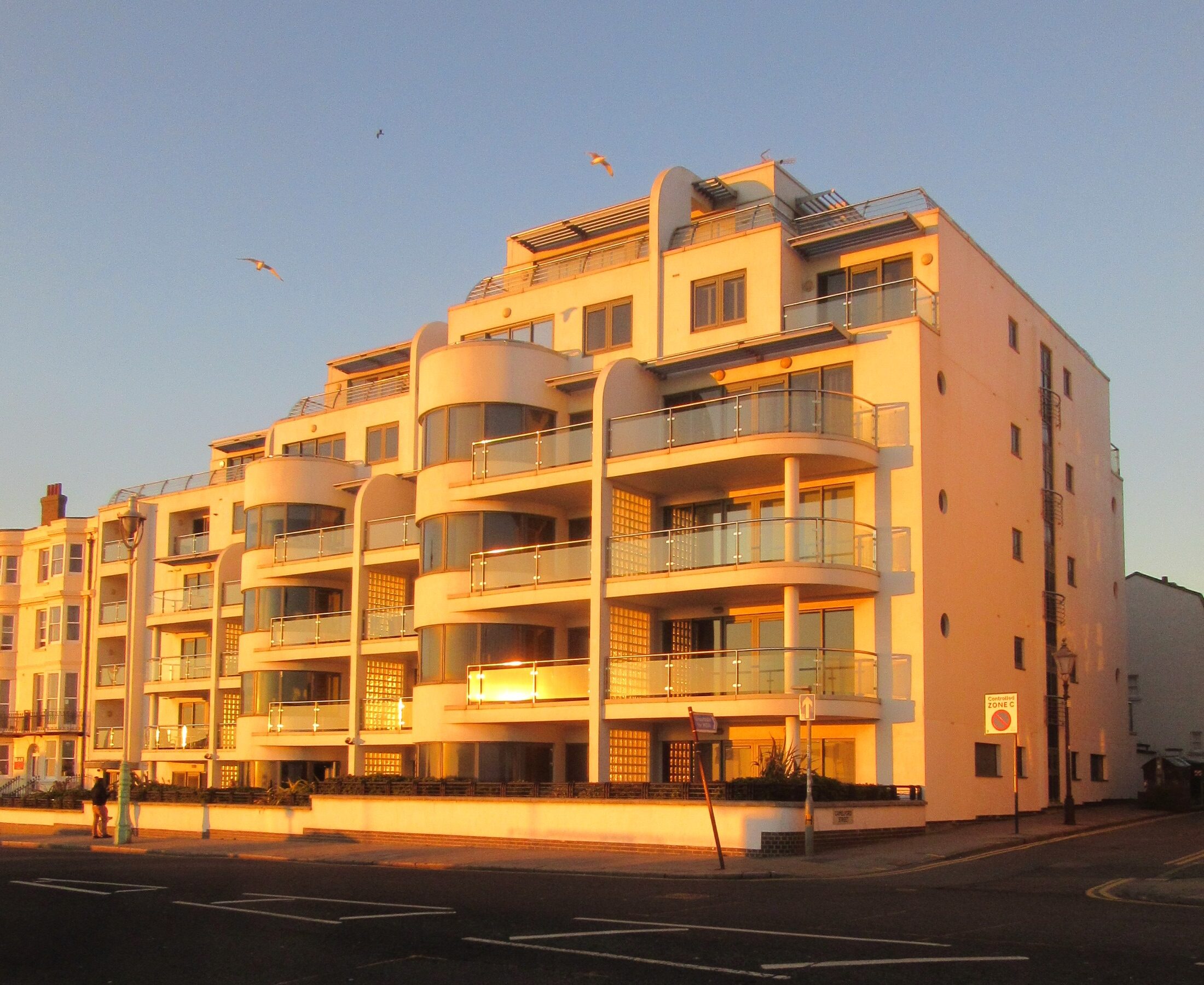
Purpose-built student accommodation (PBSA) has an institutional investment case because it can combine recurring demand, granular rental income, operational scale and relative resilience across economic cycles. It is not automatically defensive: returns depend on university quality, student demographics, competing supply, affordability, planning constraints and the operator’s ability to maintain occupancy and control costs.
TL;DR
- PBSA is an operational real-estate strategy, not simply residential property leased to students.
- Institutional demand is strongest where universities are durable, enrolment is diversified and suitable accommodation is structurally constrained.
- Income is granular but seasonal, making annual leasing execution and operational management central to returns.
- International students support demand in many cities, but concentration by country, institution or course creates risk.
- Investors should underwrite affordability, development supply, planning, utilities, financing and exit liquidity together.
Why PBSA attracts institutional capital

Purpose-built student accommodation is housing designed and operated specifically for students. Typical schemes combine private bedrooms or studios with shared amenities, managed internet, security, maintenance and, in many cases, utility-inclusive rent. Contracts generally follow the academic calendar rather than conventional residential tenancy patterns.
The sector’s institutional appeal rests on five characteristics:
- Recurring demand: each academic year creates a new leasing cycle.
- Granular income: revenue is spread across many beds rather than one commercial tenant.
- Operational scale: centralised management, procurement and technology can improve efficiency across larger portfolios.
- Potential inflation capture: rents are normally reset for each letting cycle, subject to student affordability and competition.
- Portfolio diversification: demand is linked to higher education as well as employment and household formation.
McGardens Estate (MCG) is a UK real estate investment and management firm advising family offices, GCC and overseas private capital and institutional investors, and managing UK rental portfolios for overseas landlords.
For institutions, the distinction between PBSA and ordinary student HMOs is important. A PBSA asset is closer to an operating platform: the building, brand, booking process, customer service, facilities, utilities and reputation all influence performance.
PBSA versus HMOs, Build-to-Rent and standard residential

PBSA occupies a distinct position within the living sectors. It can deliver scale more efficiently than dispersed HMOs, but it usually requires more specialist operations and has a narrower alternative-use profile than conventional apartments.
| Factor | PBSA | Student HMOs | Build-to-Rent | Standard buy-to-let | |—|—|—|—|—| | Typical demand | Full-time students | Students sharing houses | Broad renter market | Broad renter market | | Leasing pattern | Academic-year cycle | Academic-year cycle | Rolling throughout year | Rolling throughout year | | Income granularity | High in larger schemes | Moderate | High in larger schemes | Low per asset | | Operational intensity | High | Moderate to high | High | Moderate | | Utilities | Often included | Sometimes included | Usually separate | Usually separate | | Institutional scalability | Strong at scheme level | Limited by fragmentation | Strong | Limited without aggregation | | Alternative use | Often constrained | Residential, subject to rules | Residential | Residential | | Principal risk | Annual occupancy and university exposure | Licensing, management and local regulation | Lease-up and renter affordability | Voids, financing and maintenance |
> Comparison box: PBSA vs conventional residential > > – PBSA: annual re-leasing can reprice income faster, but concentrates leasing risk into a short period. > – Residential: tenancies can provide smoother continuity, but rent resets may be less frequent. > – PBSA: amenity, utilities and service quality materially affect conversion and retention. > – Residential: unit quality and location matter, but operations are generally less hospitality-like. > – PBSA: university and student-market analysis is fundamental. > – Residential: employment, household formation and local affordability are usually more important.
What creates durable demand?

Headline student numbers are not enough. Institutional underwriting should assess the quality, composition and persistence of demand at university and city level.
University strength
A durable market normally contains one or more institutions with established reputations, broad course offerings, research activity and the financial capacity to adapt. Universities with heavy dependence on a narrow set of courses or overseas recruitment channels warrant more conservative assumptions.
The Higher Education Statistics Agency, now part of Jisc, is a core source for enrolment data. Investors should examine multi-year trends rather than one intake, separating undergraduate, postgraduate, domestic and international cohorts.
Accommodation need
The relevant measure is not simply student population. Investors must estimate how many students require accommodation away from the family home, how many can access university halls, and what supply exists across PBSA, HMOs and other private rentals.
Manchester, Leeds, Liverpool, Birmingham, Sheffield and Nottingham are established student markets, but city-level branding should never replace micro-location analysis. Travel time to campus, public transport, neighbourhood safety, competing schemes and the appeal of specific universities can produce very different outcomes within the same city.
International demand
International students can be valuable customers because they often arrange accommodation before arrival and may favour professionally managed, furnished buildings. They also introduce exposure to visa policy, currency movements, geopolitical conditions and recruitment concentration.
The Office for Students, Universities UK, HESA/Jisc and gov.uk policy publications should be read together. No single dataset captures future demand certainty.
Affordability
Rental growth is sustainable only if students or their families can pay. Underwriting should compare proposed rents with maintenance support, parental budgets, nearby HMOs, university halls and competing PBSA. Premium amenity does not remove the affordability ceiling.
How institutional investors should underwrite PBSA
PBSA requires a bed-level operating model rather than a simple rent-per-square-foot appraisal. The following checklist captures the principal workstreams.
Institutional PBSA due-diligence checklist
- Map the addressable student pool. Separate students living at home, those guaranteed university accommodation and those seeking private housing.
- Test university concentration. Measure exposure by institution, course level, domicile and recruitment market.
- Build a complete supply pipeline. Include operational beds, schemes under construction, consented projects and credible planning applications.
- Benchmark product and price. Compare room size, amenity, distance, contract length, deposits, incentives and whether utilities are included.
- Model occupancy by room type. Studios and cluster rooms can have different demand pools and leasing velocity.
- Stress-test gross-to-net leakage. Allow for utilities, staffing, marketing, repairs, bad debt, booking commissions, insurance, security and lifecycle capital expenditure.
- Review planning and building compliance. Confirm lawful use, planning obligations, fire strategy, building-safety duties and local authority requirements.
- Assess the operator. Examine booking conversion, digital acquisition costs, arrears, complaints, staff turnover, summer income and historic occupancy.
- Stress-test debt. Model higher interest costs, weaker valuation, slower leasing and refinancing at a conservative loan-to-value ratio.
- Plan the exit. Identify likely buyers, stabilisation requirements and whether the asset’s specification supports alternative use.
RICS valuation standards and professional building, fire, legal, tax and technical advice are essential. Market reports from Savills, JLL, CBRE, Knight Frank and Colliers can provide useful context, but transaction underwriting must remain asset-specific.
Development, operating and financial risks

PBSA’s defensive reputation can obscure material risks. The main threats rarely arise in isolation.
| Risk | Why it matters | Institutional response | |—|—|—| | University concentration | A recruitment shock can reduce the addressable pool quickly | Diversify by institution, domicile and price point | | New supply | Several schemes completing together can pressure rents and incentives | Track deliverable pipeline, not only planning headlines | | Affordability | Students may trade down to HMOs or cheaper PBSA | Stress-test rents and offer multiple room types | | Annual lease-up | Missed bookings may create a full academic-year void | Monitor weekly booking pace and conversion | | Utility inflation | Inclusive rents expose the owner to consumption and tariff costs | Hedge where appropriate and invest in efficiency | | Construction cost | Delays can miss the academic intake and defer income for a year | Include programme contingency and contractor protections | | Planning restrictions | Student use may be tightly defined | Verify consent, nominations and Section 106 obligations | | Financing | A higher Bank of England base rate can affect debt cost and values | Use prudent leverage and interest-rate protection | | Reputation | Poor service can spread rapidly through reviews and social media | Establish operator KPIs and active asset management | | Exit liquidity | Buyer appetite varies with capital markets | Underwrite several exit routes and longer hold periods |
Development timing is particularly unforgiving. A conventional residential delay may postpone phased sales or leasing; a PBSA completion that misses September can impair an entire academic year. Practical completion, commissioning, fire compliance, snagging and student move-in must therefore be coordinated backwards from the intake date.
Operational expenditure also deserves close attention. Utility-inclusive contracts, round-the-clock security, communal areas and frequent resident turnover make gross yield an incomplete measure. Net operating income after recurring expenditure and lifecycle capital costs is the more meaningful institutional metric.
Investment routes for family offices and institutions
Capital can access PBSA through standing investments, development, forward funding, joint ventures, operating platforms or listed vehicles. The appropriate structure depends on return objectives, governance capacity and appetite for construction and leasing risk.
| Route | Typical attraction | Main exposure | Suitable investor profile | |—|—|—|—| | Stabilised acquisition | Existing income and operating evidence | Pricing, capex and future leasing | Income-focused capital | | Development | Potential development margin | Planning, construction and lease-up | Higher-return, specialist capital | | Forward funding | Early access with structured delivery | Counterparty and completion risk | Institutions with development oversight | | Joint venture | Local expertise and aligned capital | Governance and partner dependence | Overseas investors and family offices | | Platform investment | Scale, brand and operating capability | Corporate and execution risk | Long-duration institutional capital | | Listed vehicle or fund | Diversification and easier administration | Market pricing and manager risk | More passive capital |
Large portfolios may produce procurement benefits, data depth and operating efficiencies. However, scale should not be confused with diversification: a portfolio concentrated in similar universities, price points or international source markets can still contain correlated risk.
PBSA can also sit alongside Build-to-Rent and private rented sector assets within a broader living-sector allocation. The combination may diversify tenant cohorts and leasing patterns, although both strategies remain exposed to construction costs, interest rates and household affordability.
What changes for an overseas buyer or investor from the UAE?

An overseas buyer faces the same property fundamentals as a UK institution, with additional tax, financing, governance and management considerations. UAE, Saudi Arabian, Qatari and wider GCC investors should establish the ownership and operating structure before agreeing commercial terms.
Tax and ownership
A UK Ltd company, offshore company, partnership, fund or joint venture can produce different tax, reporting, control and succession outcomes. Non-UK resident status does not remove UK tax exposure. Depending on the asset and transaction, investors may need advice on corporation tax, capital gains, VAT, SDLT and the non-resident SDLT surcharge.
PBSA classification matters because tax treatment can depend on the precise property, transaction and use. Investors should rely on current gov.uk guidance and regulated UK tax and legal advice rather than applying ordinary residential assumptions to a specialist scheme.
Financing and currency
Non-resident borrowers may face lower loan-to-value ratios, additional source-of-funds checks and narrower lender choice. Debt pricing will reflect the Bank of England base rate, gilt and swap markets, asset quality, operator strength and sponsor covenant.
GCC investors also carry sterling currency exposure. Currency movements can affect equity requirements, income distributions and realised returns even when the property performs as underwritten.
Management and governance
The Non-Resident Landlord Scheme is relevant to many overseas recipients of UK rental income, although application depends on the ownership and operating arrangement. Specialist tax advice is required.
Remote ownership also requires formal reporting: booking pace, occupancy, arrears, utilities, operating expenditure, incidents, resident satisfaction and capital works should be visible through an agreed dashboard. Reserved matters, bank mandates and escalation procedures should be documented before launch.
McGardens’ view
MCG’s assessment is that PBSA remains institutionally credible where three conditions coincide: a durable university base, an evidenced accommodation shortage at an affordable price point, and an operator capable of converting demand into net income. A city’s student reputation alone is insufficient.
The strongest opportunities are not necessarily the most premium. In markets where living costs are under pressure, well-located mid-market cluster rooms can offer a deeper demand pool than high-specification studios. Conversely, a studio-led scheme may perform well where postgraduate and international demand is proven, but it should not be underwritten on national enrolment growth alone.
Family offices and GCC investors should treat operating capability as part of the real estate. The value of a PBSA scheme is shaped by booking data, reputation, staffing, energy management and annual lease-up discipline. Separating ownership from operations can improve governance, but only if incentives, reporting and performance remedies are explicit.
Institutional capital should also resist using gross yield as the principal comparison with HMOs or conventional apartments. The correct comparison is risk-adjusted net income after management, utilities, marketing, lifecycle capex and financing, with a realistic exit assumption. On that basis, PBSA can be a compelling living-sector allocation, but only through selective acquisition and active asset management.
> Key takeaways > > – PBSA’s institutional case rests on recurring demand, granular income and scalable operations. > – University durability, affordability and competing supply matter more than city reputation. > – The asset should be assessed as an operating business as well as real estate. > – Overseas capital needs early advice on ownership, SDLT, financing, currency and remote governance. > – Net operating income and downside resilience are more informative than headline gross yield.
FAQ
Is purpose-built student accommodation a good institutional investment?
Purpose-built student accommodation can be a good institutional investment when demand is deep, supply is constrained and operations are strong. Its granular income and annual rent resetting can support resilience, but a poor university market, unaffordable rents or weak operator can undermine performance. Investors should judge net operating income and downside protection rather than relying on national student growth.
What is the difference between PBSA and student HMOs?
PBSA is a purpose-designed, centrally operated accommodation scheme, while student HMOs are conventional houses occupied by several students. PBSA usually offers greater institutional scale, amenities and operating data. HMOs may have broader alternative-use potential but create fragmented management, licensing and acquisition challenges. Both depend on local affordability, university demand and regulatory compliance.
What gross yield should investors expect from PBSA?
There is no reliable universal PBSA gross yield because pricing varies by city, university, lease structure, operator, building quality and transaction scale. Gross yield can also mislead where rent includes utilities and extensive services. Investors should compare net operating income after recurring costs, lifecycle capital expenditure and realistic occupancy, then assess the return against financing and execution risks.
How should a UAE investor buy UK student accommodation?
A UAE investor should determine the ownership, tax, financing and governance structure before exchange. The analysis should cover SDLT and any applicable non-resident surcharge, UK taxation, source-of-funds requirements, sterling exposure and remote asset management. A UK Ltd company may be appropriate in some cases, but it is not automatically the best structure for every investor.
Does the Non-Resident Landlord Scheme apply to PBSA investors?
The Non-Resident Landlord Scheme can apply when a non-UK resident receives UK rental income, but the practical treatment depends on ownership and operating arrangements. Direct ownership, a company, partnership or fund structure may produce different obligations. Investors should obtain UK tax advice and review current HMRC guidance on gov.uk before income begins.
What are the biggest risks in PBSA development?
The biggest PBSA development risks are planning failure, construction cost escalation, delayed completion, weak pre-leasing and mispriced demand. Missing the academic intake can defer substantial income because leasing is seasonal. Institutions should use programme contingency, robust contractor protections, conservative rent assumptions and an operator-led mobilisation plan covering marketing, staffing, commissioning and resident move-in.