
Last-Mile Logistics: What Family Offices Need to Know

Last-mile logistics refers to the final step in the supply chain, moving goods from a transport hub to their final destination, typically a customer’s home or a retail store. For family offices and institutional investors, this property sector represents a compelling opportunity to secure long-term, inflation-linked income streams and capital growth, driven by the non-discretionary demand of e-commerce. These assets are now a cornerstone of diversified real estate portfolios, prized for their strong tenant covenants and resilience.
TL;DR: Investing in Last-Mile Logistics
- Definition: Last-mile facilities are small to mid-size urban warehouses essential for rapid delivery in the e-commerce supply chain.
- Primary Driver: The structural shift to online retail and consumer demand for next-day or same-day delivery has created a critical shortage of suitable properties.
- Key Locations: Investment is concentrated around major urban centres, particularly within London’s M25, the ‘Midlands Golden Triangle’, and core regional cities like Manchester and Birmingham.
- Investor Appeal: Strong tenant covenants (e.g., Amazon, DPD, major grocers), long leases with index-linked rent reviews, and significant potential for rental and capital growth.
- Financials: Prime yields have compressed due to high demand but rental growth prospects remain among the strongest in commercial property, offering attractive total returns.
—
What is Last-Mile Logistics?

Last-mile logistics constitutes the final and most critical phase of the delivery process. It involves the movement of goods from a regional distribution centre to the end consumer. The properties that facilitate this—often called urban logistics hubs, last-mile depots, or last-touch facilities—are distinct from the large-scale, million-square-foot ‘big box’ warehouses found alongside major motorways.
These assets are typically smaller (20,000 to 150,000 sq ft) and are strategically located on the peripheries of densely populated urban areas. Their purpose is singular: to enable speed and efficiency. By positioning inventory closer to the customer, companies can fulfil orders for same-day or next-day delivery, a service that has become a key battleground for retailers.
The Key Drivers of Demand for UK Logistics Space

The demand for last-mile facilities is not cyclical but structural, underpinned by fundamental changes in consumer behaviour and supply chain strategy. The COVID-19 pandemic acted as an accelerant, but the underlying trends were established well before.
- E-commerce Penetration: The proportion of retail sales conducted online has grown consistently.
- Consumer Expectations: Rapid delivery is no longer a premium service but an expectation, forcing retailers to decentralise their logistics networks.
- Supply Chain Resilience: Post-pandemic and Brexit, companies are holding more inventory onshore (‘just-in-case’ vs. ‘just-in-time’) to mitigate disruption, increasing the overall need for storage space.
- Urbanisation: Growing city populations concentrate consumer demand, making proximity a prerequisite for efficient delivery.
UK Logistics Market Statistics
- E-commerce Share: Online sales accounted for 26.5% of all retail sales in the UK (ONS, 2023).
- Take-up Volume: Annual take-up of logistics space has consistently outperformed long-term averages for the past several years, with reports from Knight Frank and Savills regularly highlighting the supply/demand imbalance.
- Vacancy Rates: Nationwide vacancy rates for logistics property have remained at historic lows, often below 3% and even lower for prime last-mile assets in key locations (CBRE, 2023).
- Rental Growth: Prime industrial and logistics rents saw double-digit growth in many submarkets over the past five years (Colliers, 2024).
Characteristics of a Prime Last-Mile Asset

Not all industrial sheds are created equal. For family offices assessing direct investment opportunities, identifying prime assets requires a focus on specific criteria. The quality of the location and building specifications directly impacts tenant demand, rental tone, and long-term value.
Checklist for Assessing a Last-Mile Opportunity
- [ ] Proximity to Population: Is the asset within a 30-minute drive time of a major urban population? Proximity to affluent demographics is a key metric for tenants.
- [ ] Access to Transport Networks: Does the site offer immediate access to the primary arterial road network (e.g., M25, M6, M62) and avoid urban congestion points?
- [ ] Site Coverage & Yard Depth: Is the site coverage low (typically below 50%)? A large, secure yard is critical for lorry turning circles, external storage, and van parking.
- [ ] Building Specification: Does the facility meet modern requirements? This includes an eaves height of at least 8-10 metres, a high ratio of dock-level and ground-level loading doors, and high-quality ancillary office space.
- [ ] Power & Utilities: Can the site support the power requirements for automation, sortation equipment, and a fleet of electric vehicles (EVs)?
- [ ] Labour Availability: Is there a sufficient local labour pool to support 24/7 operations? This is an increasingly important due diligence point.
UK Hotspots for Last-Mile Logistics Investment
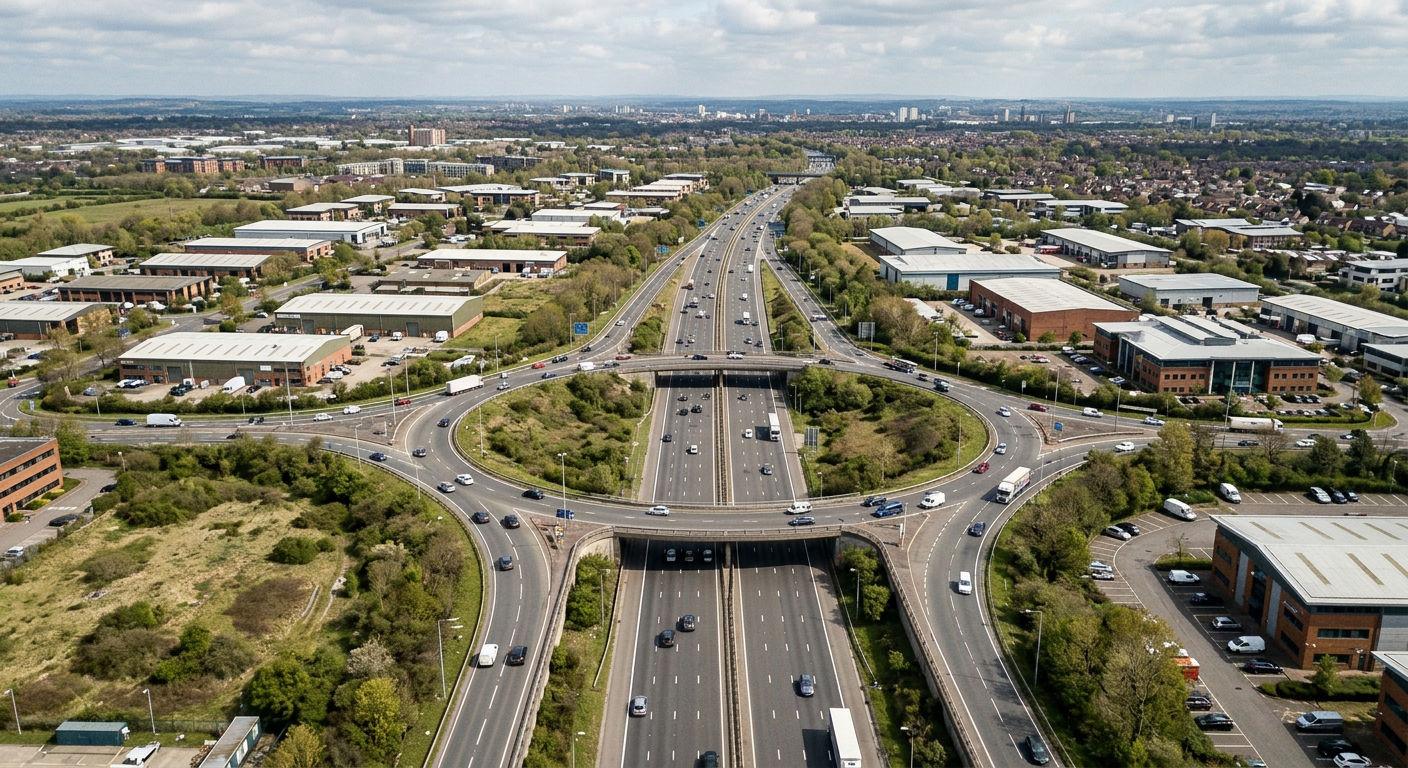
While London and the South East command the highest rents and capital values, strong opportunities exist across the UK’s core regional cities. These locations benefit from their own large economies, significant population catchments, and strategic positions within the national logistics network.
| Region/City | Prime Rent (per sq ft) | Prime Net Initial Yield | Key Drivers & Commentary | |—————–|————————|————————-|———————————————————————————————————————-| | London | £25.00 – £35.00+ | 3.25% – 3.75% | Extreme land scarcity, Europe’s largest consumer market. High barriers to entry and prospects for strong rental growth. | | Birmingham | £9.50 – £12.00 | 4.25% – 4.75% | Heart of the ‘Golden Triangle’. Unrivalled motorway connectivity (M6, M5, M42). Strong manufacturing and e-commerce base. | | Manchester | £9.00 – £11.50 | 4.50% – 5.00% | Largest regional economy outside London. Major population hub and gateway to the North of England. | | Leeds | £8.50 – £10.50 | 4.75% – 5.25% | Strategic location on the M1/M62 corridor. Serves the large Yorkshire urban conurbation. |
Note: Rents and yields are indicative and subject to change. Data compiled from market reports by JLL, CBRE, and Savills (Q4 2023/Q1 2024).
Investment Structures: Direct Purchase vs. Fund Investment
For a family office, the entry route into the logistics sector depends on its risk appetite, internal resources, and desired level of control.
Direct Asset Purchase vs. Specialist Fund
Direct Purchase
- Control: Full control over asset management decisions, leasing strategy, and timing of disposal.
- Returns: All returns (rental income and capital growth) accrue directly to the investor.
- Expertise: Requires significant in-house or mandated expertise in sourcing, due diligence, and asset management.
- Lot Size: Higher capital outlay required for a single asset; can lead to concentration risk.
Specialist Logistics Fund
- Diversification: Instant diversification across multiple assets, locations, and tenants.
- Management: Professionally managed by a sector specialist with an established platform.
- Access: Provides access to a high-quality portfolio that may be difficult to assemble directly.
- Fees & Control: Incurs management fees and provides less direct control over individual assets.
McGardens’ View: The Opportunity for Family Offices
The strategic case for family offices to allocate capital to UK logistics is clear and compelling. For decades, prime office and high-street retail formed the bedrock of commercial property portfolios. The structural shifts of the last ten years have unequivocally transferred that role to the industrial and logistics sector.
What this means for family office capital is a need for strategic reallocation. The long-term, inflation-protected income profile of a logistics asset let to a strong covenant aligns perfectly with the wealth preservation and growth mandates typical of family offices. Unlike residential assets such as HMOs or Build-to-Rent, logistics leases are typically Full Repairing and Insuring (FRI), meaning the tenant bears the costs of all repairs, maintenance, and insurance, resulting in a predictable, passive income stream.
However, the market is mature and competitive. Sourcing off-market opportunities and accurately underwriting assets requires deep sector specialisation. The key risk is not tenant demand, but overpaying for an asset or acquiring a secondary building that may become obsolete as specifications evolve. Partnering with advisors who have a demonstrable track record in the sector is therefore not just advisable, but essential for successful execution.
Future Trends Shaping the Sector

The logistics landscape continues to evolve. Investors must be aware of the trends that will define the next generation of assets.
- Multi-Storey Logistics: As land values in prime urban spots become prohibitive, developers are looking upwards. Multi-storey warehouses, common in dense Asian cities, are now emerging in the UK, particularly in London.
- Automation & Robotics: Modern facilities must be able to accommodate sophisticated automation and robotics systems, which require higher power capacity, specific floor tolerances, and greater clear heights.
- ESG & Sustainability: Environmental, Social, and Governance (ESG) criteria are paramount. Tenants and investors demand high BREEAM ratings, rooftop solar PV, EV charging infrastructure, and staff wellness facilities. These are no longer ‘nice-to-haves’ but essential for attracting prime tenants and ensuring institutional liquidity on exit.
A Timeline of Logistics Evolution
- Pre-2010: Traditional Warehousing – Large, simple sheds in out-of-town locations supporting a store-based retail model.
- 2010-2019: The Rise of E-commerce – Emergence of ‘big box’ national and regional distribution centres to serve online retail.
- 2020-Present: The Last-Mile Revolution – Proliferation of smaller urban logistics hubs focused on delivery speed. Increased focus on automation, ESG, and multi-storey development.
> ### Key Takeaways > Structural, Not Cyclical: The demand for last-mile logistics is driven by a permanent shift in consumer behaviour towards e-commerce. > Location is Paramount: Proximity to urban populations and major transport arteries is the single most important value driver. > Yields Reflect Quality: Prime yields are tight, but they are attached to assets with the strongest rental growth potential in the commercial property market. > Specialist Knowledge is Crucial: The market is competitive. Successful investment requires expert guidance to source, underwrite, and manage assets effectively.
—
FAQ: Investor Questions on Last-Mile Logistics
What is the typical lease length for a last-mile logistics unit?
A typical lease for a new or prime last-mile unit is between 10 to 15 years. Critically, these leases often include periodic rent reviews, which may be linked to inflation (RPI/CPI) or the open market, providing investors with a hedge against inflation and capturing rental growth. Shorter, more flexible leases may be found on older, secondary stock.
How do last-mile yields compare to other commercial property?
Last-mile logistics yields are among the sharpest (lowest) in commercial property, reflecting intense investor demand. They are significantly lower than secondary industrial or most retail assets. However, they are pursued because the prospect for rental growth is so strong, leading to a superior ‘total return’ (income yield + capital growth) compared to higher-yielding assets with flat or declining rental profiles.
Are planning permissions difficult for logistics developments?
Yes, securing planning can be a major challenge. Land zoned for industrial use is scarce, especially near cities where it competes with residential development. Local authorities and residents can be resistant due to concerns about HGV traffic and 24/7 operation. This planning difficulty acts as a significant barrier to new supply, which in turn supports rental values for existing stock.
What are the main risks in logistics investment?
The primary risks include tenant default, though this is mitigated by leasing to strong covenants; obsolescence, if a building cannot meet future demands for automation or ESG standards; and localised oversupply, if too much speculative development occurs in one submarket. A broader economic downturn could also temper consumer spending and thus demand from occupiers.
How does an Ltd company structure benefit logistics investment?
Using a UK Limited Company (SPV) is the standard structure for holding commercial property assets. It provides limited liability, separating the asset from the investor’s other holdings. It can also be more tax-efficient for retaining and reinvesting income. For international investors and family offices, it can simplify succession planning and the eventual sale of the asset, which can be achieved via a corporate wrapper sale.
Is it better to invest in London or key regional cities?
It depends on the investor’s strategy. London offers the highest rental growth potential and lowest risk profile but also the lowest initial yields. Regional cities like Manchester and Birmingham provide higher initial yields and have very strong growth prospects of their own, driven by significant economic and population growth. A balanced portfolio may include exposure to both.