
UK Hotel Investment: A Comparison of Branded vs. Independent Hotel Yields

Branded hotels generally offer lower but more stable and predictable net initial yields, typically in the 5-6% range, supported by established operational systems and brand recognition. Conversely, independent hotels can generate higher potential yields, often reaching 6-8% or more, but this comes with greater operational risk, higher management intensity, and more volatile income streams. The optimal choice is contingent on an investor’s risk appetite, target returns, and capacity for hands-on asset management.
TL;DR: Branded vs. Independent Hotel Investment
- Yield Profile: Branded hotels typically produce lower but more consistent yields; independents offer the potential for higher yields but with increased volatility.
- Operational Burden: Branded hotels benefit from systematised operations and marketing, whereas independents require intensive, hands-on asset management.
- Financing: Lenders often view branded hotels more favourably due to perceived lower risk, potentially leading to better financing terms.
- Cost Structure: Independent hotels avoid franchise, marketing, and loyalty programme fees, which can erode 5-15% of a branded hotel’s gross revenue.
- Value-Add Potential: Independent hotels present greater opportunity for value creation through rebranding, repositioning, or operational turnarounds.
Understanding Hotel Investment Metrics

Unlike traditional commercial or residential property where yield is calculated on rent, hotel returns are based on trading performance. Investors must be familiar with hospitality-specific metrics:
- Average Daily Rate (ADR): The average rental income per occupied room on a given day.
- Revenue Per Available Room (RevPAR): Calculated as ADR multiplied by the occupancy rate, this is the primary top-line performance indicator.
- Gross Operating Profit Per Available Room (GOPPAR): This metric subtracts departmental and operational expenses from total revenue, providing a clearer view of the hotel’s core profitability before management fees, insurance, and property taxes.
- Net Initial Yield (NIY): For investment purposes, the stabilised Net Operating Income (NOI) of the hotel is divided by its gross purchase price. This is the key metric for comparing hotel assets against other property classes.
The Case for Branded Hotels: Stability and Scale

Investing in a hotel affiliated with a major brand like Hilton, Marriott, IHG, or Accor offers significant structural advantages that appeal to risk-averse investors, including many family offices and institutional funds.
The primary benefit is access to a powerful, global distribution system. This includes the brand’s website, central reservation system, and, most importantly, its loyalty programme. These channels can deliver a substantial and consistent base of occupancy, reducing reliance on third-party online travel agents (OTAs) and their associated commission fees.
Operationally, brands provide playbooks for everything from staffing and procurement to revenue management and marketing. This standardisation de-risks operations, particularly for investors without deep hospitality management experience. This perceived stability makes branded assets more attractive to lenders, often resulting in more favourable loan-to-value (LTV) ratios and interest rates.
The Appeal of Independent Hotels: Flexibility and Higher Returns

Independent hotels offer the entrepreneurship and creativity that brands, by their nature, must constrain. The absence of a brand mandate gives owners complete control over the property’s identity, service style, and guest experience. This allows for the creation of unique, destination-worthy assets that can command premium room rates in the right market.
Financially, the most significant advantage is the avoidance of fees. Branded hotels typically charge a package of fees—including franchise/management fees, marketing levies, and technology charges—that can total between 5% and 15% of gross revenues. For an independent hotel, this entire portion of revenue flows directly to the gross operating profit line, creating a significant uplift in potential GOPPAR and, consequently, a higher potential yield.
This structure is well-suited for value-add investors who can acquire an underperforming asset, invest in its refurbishment, and implement a sophisticated, independent management strategy to drive performance beyond what a branded formula could achieve.
Branded vs. Independent Hotels: A Comparative Analysis
| Aspect | Branded Hotels | Independent Hotels | | :— | :— | :— | | Branding & Marketing | Immediate recognition via global brand. Access to loyalty programs and central marketing funds. | Requires building a brand from scratch. Full control over marketing strategy and spend. | | Operational Model | Standardised operating procedures (SOPs), systems, and procurement. Less day-to-day owner involvement required. | Requires bespoke operational strategy. Demands intensive, expert asset management. | | Cost Structure | Subject to franchise, management, marketing, and system fees (5-15% of revenue). | No brand-mandated fees, leading to higher potential gross operating profit (GOP). | | Financing | Generally easier to finance due to predictable cash flows and lower perceived risk by lenders. | Can be more challenging to finance. Lenders require a robust business plan and strong asset management team. | | Flexibility | Constrained by brand standards for design, service, and amenities (Property Improvement Plans – PIPs). | Complete freedom in design, concept, and operations. Can adapt quickly to market trends. | | Exit Strategy | Large pool of potential buyers (institutional, private equity) seeking stable, de-risked assets. | Appeal to value-add investors, owner-operators, or brands looking to convert. Exit may be less liquid. |
Yield Expectations: A Regional UK Snapshot
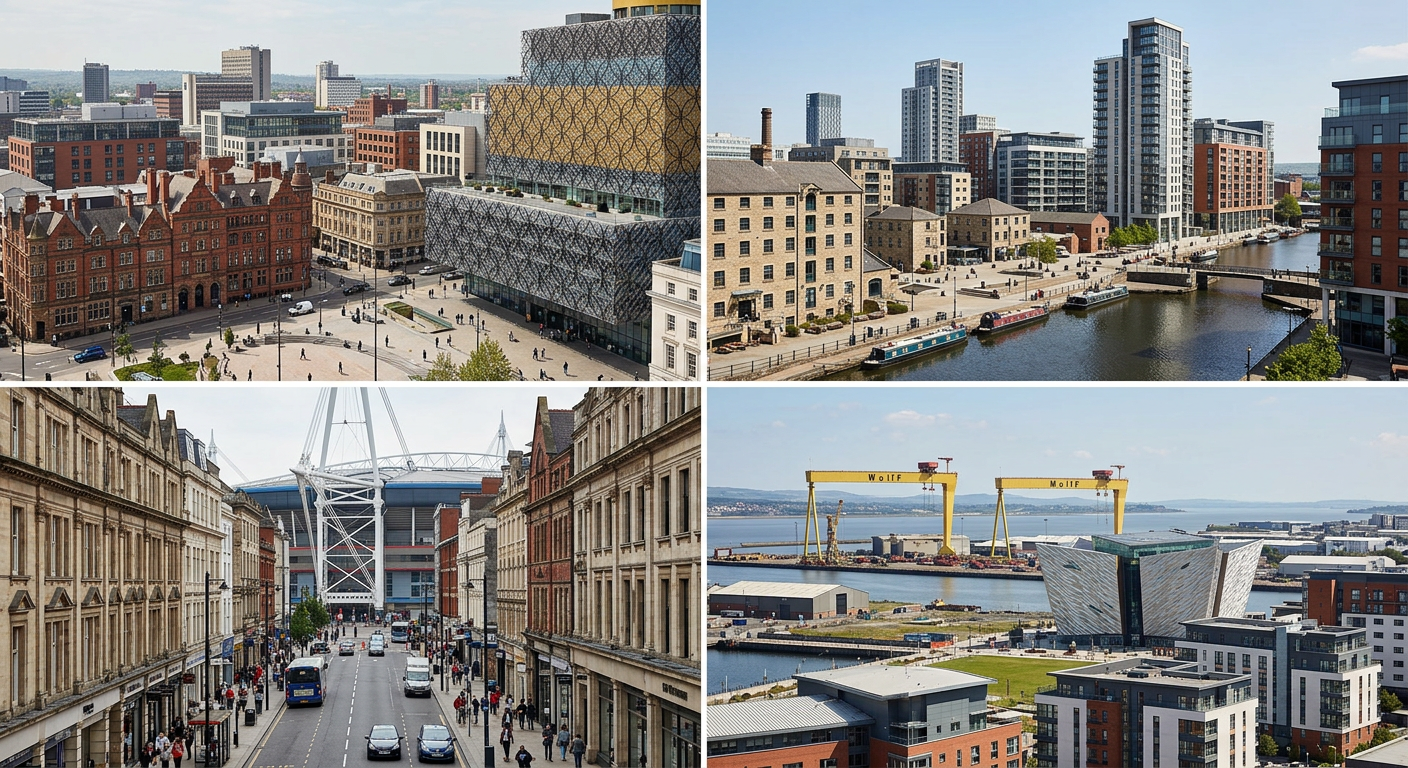
Yields vary significantly by location, asset quality, and operational model. The following table provides indicative Net Initial Yield (NIY) ranges for stabilised assets.
| Market Tier | Branded Hotel NIY | Independent Hotel NIY | | :— | :— | :— | | Prime London | 4.75% – 5.50% | 5.25% – 6.25% | | Major Regional Cities (Manchester, Birmingham, Leeds) | 5.50% – 6.50% | 6.25% – 7.50% | | Strong Secondary Cities (Sheffield, Nottingham) | 6.00% – 7.00% | 6.75% – 8.00% | | Unique/Coastal/Leisure Destinations | 6.25% – 7.25% | 7.00% – 8.50%+ |
Source: McGardens Research synthesis of market data from Savills, Knight Frank, and Colliers (2023/2024).
Acquiring a UK Hotel: An Investor’s Checklist

Successfully acquiring a hotel asset, whether branded or independent, requires rigorous due diligence.
- Define Investment Strategy: Determine your risk appetite, target return profile, and preferred operational involvement. This will dictate whether a branded or independent asset is more suitable.
- Conduct Market & Feasibility Study: Analyse the local market’s supply and demand dynamics, competitor set (compset), and historical and projected occupancy and ADR trends.
- Undertake Financial Modelling: Build a detailed 5-10 year cash flow model, sensitising for changes in RevPAR, operating costs, and interest rates. For branded hotels, accurately model all associated fees.
- Perform Comprehensive Due Diligence: This includes a triumvirate of reports: a building survey (technical DD), a legal review of titles, licenses, and contracts (legal DD), and a commercial validation of the business plan (commercial DD).
- Evaluate Management/Brand Options: If acquiring an independent, assess the existing management or identify a third-party operator. If considering a brand, negotiate the Franchise or Hotel Management Agreement (HMA).
- Structure the Acquisition: Determine the optimal legal vehicle for purchase, often a UK Ltd company, and account for transaction costs like Stamp Duty Land Tax (SDLT), including any applicable surcharges for overseas entities.
- Secure Financing: Present the complete business plan and due diligence package to lenders to secure appropriate debt financing.
UK Hotel Market Performance Statistics
Recent data provides context for the UK hospitality market’s trading environment.
- UK-wide RevPAR: UK hotel RevPAR saw year-on-year growth of approximately 9% in 2023, demonstrating a resilient recovery post-pandemic. (Source: CoStar)
- Occupancy Rates: Average UK hotel occupancy hovered around 75-80% for 2023, with major cities like London and Manchester exceeding this level. (Source: various, including STR data cited by JLL and Savills)
- Investment Volume: Total UK hotel investment volume for 2023 was approximately £2.5-£3.0 billion, indicating continued investor confidence in the sector. (Source: CBRE, Knight Frank estimates)
- Construction Pipeline: The active development pipeline remains robust, particularly in the budget-lifestyle and extended-stay segments in cities like Liverpool and Birmingham.
McGardens’ View: Aligning Hotel Strategy with Investor Profile
For institutional capital and many family offices, particularly those from the GCC region, the primary objective is long-term wealth preservation with stable, inflation-linked income. For this profile, a well-located, limited-service branded hotel in a strong regional city like Manchester or Leeds presents a compelling case. The predictable cash flow, lower operational risk, and clear exit path to a deep pool of institutional buyers align perfectly with these goals. The impact of higher Bank of England base rates on financing costs further accentuates the appeal of de-risked income streams.
Conversely, opportunistic funds and private investors with a higher risk tolerance should look towards the independent sector. The opportunity to acquire an under-managed or tired asset in a destination location, invest in a concept-led refurbishment, and drive performance through expert asset management can deliver returns significantly above the market average. This is a value-add strategy that creates alpha through operational excellence, not just passive ownership.
A growing middle ground is the rise of ‘soft brands’—such as Marriott’s Autograph Collection or Hilton’s Curio Collection. These offer investors the best of both worlds: the power of a global distribution system and the freedom to create a unique, boutique-style property. For many, this hybrid model represents the optimal balance of risk and reward in today’s market.
***
Key Takeaways for Hotel Investors
- Risk vs. Reward: The core decision between branded and independent hotels is a trade-off between the lower-risk, stable income of a branded asset and the higher-return, higher-risk potential of an independent property.
- Fees Matter: Franchise and management fees for branded hotels are a significant operating expense that must be factored into any financial model. Their absence is a primary driver of higher potential profits for independents.
- Location is Paramount: Prime city centres favour the distribution power of brands. Unique leisure destinations can provide a platform for distinctive independents to thrive and command premium rates.
- Management is Crucial: The success of an independent hotel is almost entirely dependent on the quality of its asset management. For branded hotels, success is linked to choosing the right brand partner for the specific location and market segment.
FAQ: UK Hotel Investment
How do franchise fees impact the profitability of a branded hotel?
Franchise fees significantly impact profitability by reducing top-line revenue before it becomes profit. These fees, which can range from 5-15% of gross revenue, cover brand services, marketing, and systems. While they provide access to a powerful booking engine that can lower other costs like OTA commissions, they create a permanent drag on Gross Operating Profit (GOP). Investors must ensure the revenue uplift from the brand outweighs these substantial fees.
Is it easier to secure financing for a branded or an independent hotel?
It is generally easier to secure financing for a branded hotel. Lenders perceive them as lower risk due to their proven operating models, predictable revenue streams from loyalty programs, and brand-wide performance data. An independent hotel requires a more convincing business plan, a strong track record from the management team, and may face higher interest rates or lower loan-to-value (LTV) allowances from cautious lenders.
Can an independent hotel be converted into a branded one later?
Yes, converting an independent hotel to a branded flag is a common value-add strategy. This often occurs when an investor acquires an underperforming independent hotel and believes affiliating with a brand will enhance its revenue and profitability. The process involves a negotiation with the brand and often requires a significant capital investment, known as a Property Improvement Plan (PIP), to bring the hotel up to the brand’s required standards.
What are the main operational challenges of running an independent hotel?
Running an independent hotel presents several key challenges. First, you must build brand awareness and a customer base from scratch without a global marketing engine. Second, you lack the economies of scale in procurement that major brands enjoy. Third, revenue management is more complex without the sophisticated systems and data analytics of a large chain. Finally, all operational systems for staffing, training, and accounting must be created and managed in-house.
How does location affect the branded vs. independent decision?
Location is critical. In a competitive, high-density city centre like Manchester or Birmingham, a brand’s distribution power and loyalty program can be a decisive advantage in capturing corporate and transient travel. In contrast, a unique destination like the Lake District or a trendy coastal town may be better suited for an independent hotel. In such locations, a unique character, story, and guest experience can be a more powerful draw than a standardised brand name.